Temperature Guide
Dressing for the Temperature
The same number on a thermometer can feel completely different depending on humidity, wind, and how much the temperature swings over the course of a day. Rather than reacting to a single number, it helps to check the "feels-like" temperature and the day's full range together — that alone makes it much easier to plan an outfit or an outing with confidence. Below is a breakdown of what tends to go wrong at each temperature band, plus habits worth building before you head out. This matters most during seasonal transitions or on days with a long schedule, when the outfit you picked in the morning may not hold up until evening, so it helps to leave room to adjust partway through the day. This page is meant as everyday, lifestyle guidance rather than medical advice — if you have a health condition that makes you especially sensitive to temperature, it's worth pairing these tips with advice from a professional.
Updated: August 4, 2026
Reference data · WeatherAPI / editorial lifestyle guide
How to read a forecast properly
The number shown in a weather app is air temperature — what your body actually experiences depends on wind, humidity, sunlight, and how active you are. Strong wind pulls heat away and makes things feel colder, while high humidity keeps sweat from evaporating and makes heat linger longer. If there's a big gap between the morning low and the afternoon high, dressing only for midday often leaves you underdressed by evening, so it's worth checking the day's low and high together rather than a single "today's temperature" figure. The same number can also feel different depending on the season — 20°C in early summer and 20°C in early winter call for different outfits, since your body has adjusted to a different baseline. A day spent mostly indoors and a day with a lot of time outside also call for different standards, so it helps to first gauge roughly how much of today you'll actually spend outdoors. Skimming the week-ahead forecast can also help you catch a sudden cold snap or heat spike early, which is handy for planning laundry and picking out clothes in advance.
- Check the daily low, high, and feels-like temperature together, not just one number
- If rain or wind is expected, carry a light jacket or umbrella as backup
- Account for the gap between indoor spaces (office, subway) and the outdoors when layering
- For long outdoor plans, build in rest breaks and a hydration plan ahead of time
- Skim the week-ahead forecast to catch sudden swings in temperature early
- Pack an extra layer separately on days when you'll be outside for long stretches
30°C and above — Hot
This is the range where heat fatigue and dehydration risk climb quickly. Body temperature rises fast and focus can slip, so it helps to break outdoor time into shorter stretches and seek shade and water often. High humidity is especially deceptive, since sweat can't evaporate efficiently, which makes the heat feel worse than the thermometer suggests. If you notice a headache, dizziness, nausea, or unusual fatigue, don't push through it — get somewhere cool and rest first. If you have to work or exercise outdoors, it's safer to schedule a shade break every 30 minutes to an hour and drink water on a fixed schedule rather than waiting until you're thirsty. Drinks heavy in caffeine or alcohol can increase fluid loss, so it's better to lean on water or a sports drink during a heatwave. Even indoors, weak air conditioning or poor airflow can let heat build up almost as much as outside, so closing curtains or blinds during the day helps keep a room cooler once night falls.
- Try to avoid outdoor activity between 11am and 4pm
- Wear breathable, sweat-wicking clothing along with a hat and sunscreen
- Drink water on a schedule, not just when you feel thirsty
- Rest in the shade immediately if you feel dizzy or nauseated
- Even with A/C or a fan running, keep airflow and hydration going at the same time
- Favor water or a sports drink over caffeine or alcohol for hydration
- If a room lacks A/C, keep curtains or blinds closed during the day to block direct sun
20–29°C — Comfortable to warm
This is a pleasant range for activity, but a large gap between morning and evening temperatures can make it tricky to regulate your body heat. It might feel fine when you step out in the afternoon, then cool off noticeably by evening — keeping a light layer on hand helps prevent catching a chill. On days when your activity level changes, like a workout or a commute, it's safer to dress for the temperature you'll return in rather than the temperature at the moment you leave. This band is also great weather for outdoor plans and outings, but on humid days even light activity can leave you sweaty for a while, since sweat doesn't evaporate as quickly. Choosing breathable fabric and packing a change of clothes helps you stay comfortable through the day. If you have an evening outing or an outdoor event planned, it's worth checking how much the temperature is expected to drop after sunset so you can bring a layer for it.
- Keep one light layer in your bag just in case
- Put a layer back on right after exercise once you start cooling down and sweating
- Bring a long-sleeve top or cardigan for spaces with strong air conditioning
- During seasonal transitions, cover your neck and midsection to soften sudden temperature swings
- Choose breathable fabric and pack a change of clothes to manage sweat
- Check the post-sunset temperature separately before an evening outdoor plan
10–19°C — Cool
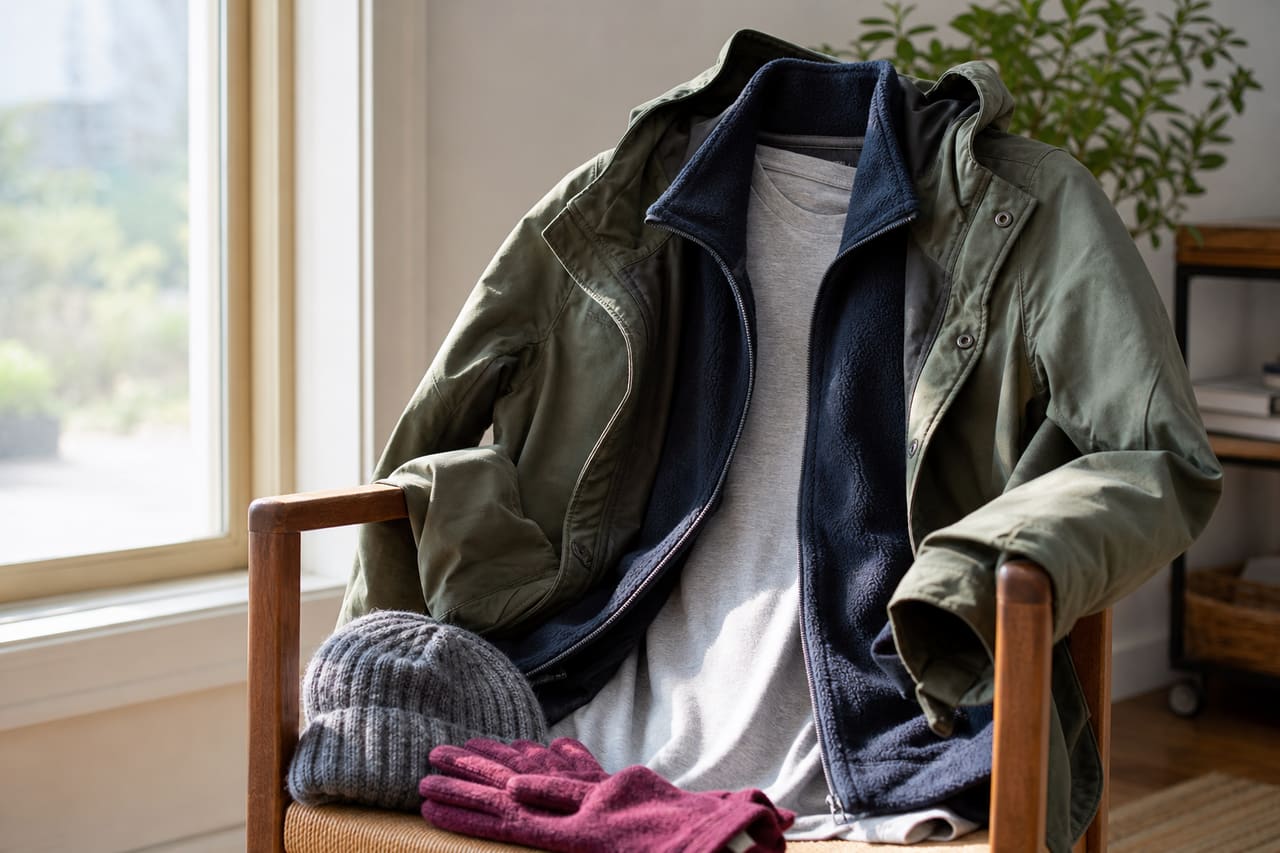
This range tends to bring more colds and muscle tightness. Keep heat-losing areas like your neck and wrists warm, and use layers you can adjust as your activity changes — wind can make it feel noticeably colder than the number implies. If you're sitting still for long stretches, studying or working at a desk, your feet and shoulders often cool first, so a light jacket or a lap blanket indoors can make a real difference. If you have to move around during the chillier parts of the day — an early workout, an early commute — warming up more thoroughly than usual helps keep your muscles and joints from being caught off guard by the cold. On days when you're moving between indoors and outdoors often, an easy-to-remove layer like a cardigan or thin jacket is more practical than a single heavy coat. If this overlaps with a seasonal transition, it's also worth checking fine dust and pollen levels alongside the temperature to look after your airways.
- Layer clothing so you can add or remove pieces as your activity level changes
- Use a scarf when moving between very different indoor and outdoor temperatures
- Keep your shoulders and knees warm during long periods of sitting
- Prioritize a windproof jacket for cycling or scooter commutes
- Warm up more thoroughly than usual before exercising in the chillier hours
- A cardigan or thin jacket beats one heavy coat when moving indoors and outdoors often
- During a seasonal transition, check fine dust and pollen levels along with the temperature
Below 10°C — Cold
This is the range where blood vessels constrict and hypothermia risk becomes real. Minimizing exposed skin and wearing a wind-blocking outer layer is the key move — fingers and toes cool first, so gloves and warm footwear matter. Temperatures tend to drop even faster in the early morning and at night, and roads can be slippery, so even a short errand deserves both warm layers and careful footing. Running the heat for long stretches indoors can dry out the air and irritate your throat or skin, so it's worth using a humidifier or airing the room out briefly now and then. If you need to be outside for a long time, layering extras like heat-tech base layers, a scarf, and portable hand warmers works well, and since children and older adults may not notice their own body temperature dropping as easily, it's worth having a caregiver double-check their outfit.
- Make a windproof coat or padded jacket non-negotiable
- Protect your extremities with gloves, a hat, and hand warmers
- Watch for icy patches and sharper temperature drops during early morning or night trips
- Change out of wet clothes or socks right away to prevent losing body heat
- Counter dry indoor heating with a humidifier or brief regular ventilation
- Layer on extras like heat-tech base layers or portable hand warmers for long stretches outside
Managing indoor–outdoor temperature gaps
Moving repeatedly between a heavily air-conditioned office or store and the heat outside in summer can strain your body's temperature regulation, and the same is true in winter when you go back and forth between an overheated room and the cold outdoors. Once the indoor–outdoor gap passes about 5–8°C, it's easy to end up with a headache, body aches, or cold-like symptoms, so in summer it helps to avoid setting the air conditioning too low and to keep a light layer nearby. In winter, keeping the heat at a moderate level and layering light indoor clothing helps soften the sudden swings. On days when you're moving through public transit, subway stations, or large stores with strong heating or cooling, having one easy-to-remove layer on hand does a lot of the work.
- Keep summer air conditioning within about 5–8°C of the outdoor temperature
- Use a light layer in strongly heated winter spaces to soften abrupt temperature changes
- Carry an adjustable layer for moving through subway stations or stores with strong heating or cooling
Outfit checklist
When a day spans multiple temperature bands, or your schedule runs long, a "base outfit plus an adjustable outer layer" combination rarely lets you down. Clothing recommendations on a weather app already factor in feels-like temperature, rain, and wind, so treat them as a starting point and add or remove a layer based on your commute and how warm your indoor spaces run. Building a habit of scanning the day's low, high, rain chance, and wind strength all at once in the morning cuts down on time spent staring into the closet. This matters even more during a seasonal transition, when a temperature similar to last week can feel completely different in practice — checking the forecast for a moment each morning is the single most reliable way to stay prepared.
- Map out your day first — commute, outdoor plans, exercise — before picking an outfit
- Toss a light jacket, spare socks, and a handkerchief in your bag
- If rain or snow is forecast, prioritize waterproofing and slip resistance
- When out with kids or older family members, dress them one notch warmer than yourself
- Build a habit of checking the day's low/high, rain, and wind together each morning
- During a seasonal transition, trust today's forecast over how last week felt
About this guide
This guide summarizes common weather and lifestyle practices for everyday reference. It does not replace official medical or emergency guidance — follow meteorological agencies and local authorities when a warning is in effect.